

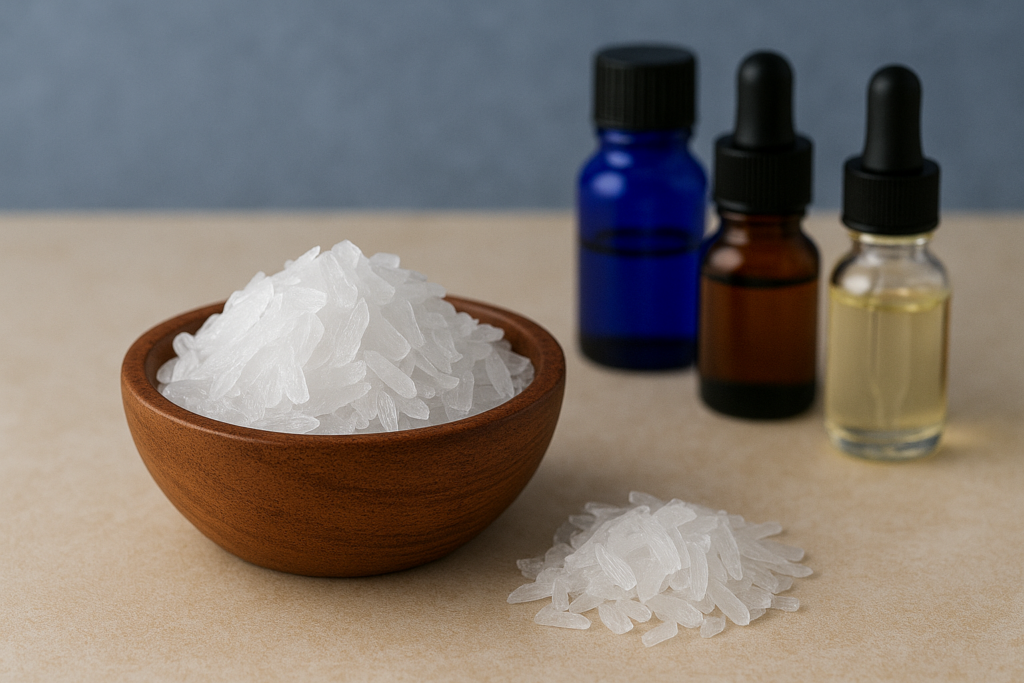
Isoborneol flakes represent a versatile natural fragrance ingredient derived from pine chemistry, offering perfumers and cosmetic formulators a distinctive balsamic, camphoraceous, herbal, and woody olfactive profile that enhances both traditional and contemporary fragrance compositions. India’s fragrance market has reached USD 1,000.8 million in 2024 and is projected to surge to USD 3,233.9 million by 2033, growing at a remarkable 13.9% CAGR, driven by rising disposable incomes, increasing personal grooming trends, and demand for natural sustainable formulations. At SVD PineChem, we specialize in supplying premium-grade isoborneol flakes to fragrance houses, cosmetic manufacturers, and personal care brands seeking authentic pine-derived ingredients that deliver consistent quality, natural authenticity, and regulatory compliance for both domestic and export markets.
Isoborneol flakes serve as key components in perfumes, soaps, detergents, fine fragrances, aromatherapy products, and spiritual incense formulations, providing woody, camphor, and pine notes that add depth and character to complex scent profiles. The compound’s chemical stability, fixative properties, and ability to blend harmoniously with other fragrance materials make it invaluable for perfumers crafting aromatic, fougère, woody, and oriental fragrance families. SVD PineChem has served India’s fragrance and cosmetics industries for over 40 years, establishing our reputation through consistent product quality, technical formulation support, and deep understanding of how natural pine chemicals like isoborneol flakes perform across diverse applications and regulatory environments.
What Is Isoborneol and How Does It Differ from Other Camphoraceous Ingredients?
Isoborneol flakes are crystalline terpene alcohol compounds with the molecular formula C₁₀H₁₈O, representing the exo-isomer of borneol where the hydroxyl (-OH) functional group occupies the exo position on the bicyclo[2.2.1]heptane ring system. This structural configuration distinguishes isoborneol from its constitutional isomer borneol, resulting in distinct olfactory characteristics: isoborneol exhibits a more balsamic scent profile compared to borneol’s drier, cleaner camphoraceous character. The compound is prepared through hydration and rearrangement of camphene or pinene, offering natural pine-derived chemistry that aligns with consumer demand for bio-based fragrance ingredients.
The olfactory profile of isoborneol flakes combines balsamic, camphoraceous, herbal, and woody notes with subtle spicy undertones that provide stability and healing scent characteristics to fragrance compositions. Unlike camphor itself, which presents aggressive penetrating qualities, isoborneol delivers refined camphoraceous nuances suitable for sophisticated perfumery applications. The compound’s miscibility in alcohol and organic solvents, combined with a melting point of 205-214°C and boiling point of 213°C, ensures excellent formulation compatibility across eau de cologne, eau de toilette, eau de parfum, and functional fragrance applications.
Why Are Isoborneol Flakes Important for Fragrance Formulation in 2025?
Isoborneol flakes address multiple market trends driving India’s fragrance industry growth in 2025, including consumer preference for natural ingredients, demand for complex multi-dimensional scents, and regulatory requirements favoring bio-based sustainable materials. The global shift toward natural and sustainable formulations has accelerated adoption of pine-derived terpene alcohols like isoborneol that offer authentic botanical origin, biodegradability, and lower environmental impact compared to purely synthetic fragrance chemicals. India’s emerging consumer base in tier 2 and tier 3 cities, accessible through e-commerce expansion, demonstrates growing appreciation for premium fragrances featuring natural woody and balsamic notes characteristic of isoborneol.
The compound’s fixative properties contribute to fragrance longevity and stability, helping to moderate evaporation of more volatile citrus and aromatic top notes while maintaining consistent scent projection throughout wear. At SVD PineChem, our technical team supports formulators in optimizing isoborneol flake dosage to achieve desired fixative effects without overwhelming other fragrance components. The growing youth interest in personalized and gender-neutral fragrances particularly benefits from isoborneol’s versatile woody-balsamic profile that transcends traditional masculine and feminine fragrance categories.
How Should Perfumers Use Isoborneol Flakes in Fine Fragrance Formulations?
Isoborneol flakes perform optimally in fine fragrance applications at concentrations between 0.01% to 30% by weight of the fragrance concentrate, with typical usage ranging from 1% to 15% depending on the desired olfactory intensity and fragrance family. For eau de cologne formulations (2-5% fragrance concentration), isoborneol should be used at lower levels of 0.5-1.5% to provide herbal lift and subtle woody undertones without overwhelming delicate citrus freshness. Eau de toilette compositions (5-15% fragrance concentration) benefit from optimal isoborneol dosage in the 1-3% range, where the compound contributes meaningfully to aromatic heart development and mid-phase scent evolution.
Eau de parfum formulations (15-20% fragrance concentration) can incorporate similar isoborneol levels of 1-3%, though perfumers should note that the compound may appear sharper and more pronounced due to higher alcohol concentration and reduced dilution. SVD PineChem recommends starting with conservative dosages at the lower end of these ranges and gradually increasing concentration through iterative testing until desired olfactory balance is achieved. The compound’s medium odor intensity provides good diffusion characteristics without dominating other fragrance components, positioning it ideally as a secondary modifier and fixative rather than a primary focal note.
What Are the Best Blending Combinations for Isoborneol Flakes?
Isoborneol flakes demonstrate exceptional synergy with multiple fragrance ingredient categories, enabling perfumers to create authentic, complex, and commercially appealing scent compositions:
- Aromatic Herbs: Blends harmoniously with lavender oils, rosemary, and sage to reinforce natural camphoraceous aspects while adding woody dryness and herbal authenticity
- Woody Materials: Combines effectively with cedarwood, vetiver, and sandalwood to create naturalistic woody-earthy compositions with improved depth and character
- Resinous Ingredients: Pairs excellently with olibanum (frankincense) and benzoin to produce authentic incense effects with enhanced diffusion and spiritual qualities
- Citrus Terpenes: Works synergistically with limonene, pinene, and citrus oils to provide aromatic lift, improved tenacity, and better evaporation balance
- Balsamic Notes: Complements Peru balsam, Tolu balsam, and styrax to intensify warm, sweet-woody characteristics in oriental fragrance families
The compound’s ability to enhance perceived naturalness of essential oil reconstructions makes it particularly valuable for natural and organic-certified fragrances where synthetic aroma chemicals face restrictions. At SVD PineChem, we provide application guidelines and blending suggestions tailored to specific fragrance categories including aromatic fougère, woody chypre, oriental amber, fresh citrus, and spa wellness fragrances where isoborneol’s distinctive profile delivers maximum creative and commercial value.
What Dosage Guidelines Should Cosmetic Manufacturers Follow?
Isoborneol flakes find extensive application beyond fine perfumery in decorative cosmetics, shampoos, toilet soaps, body washes, and other personal care products where dosage requirements differ from pure fragrance formulations. For functional fragrances in laundry products, room sprays, and cleaning formulations, isoborneol can be incorporated at levels up to 3% of the fragrance component, providing sustained woody-fresh character that masks malodors effectively. The compound’s antimicrobial and anti-inflammatory properties offer additional functional benefits in personal care applications beyond pure olfactory contribution.
Safety and regulatory compliance require adherence to International Fragrance Association (IFRA) standards, with the 51st Amendment introducing 59 new rules affecting fragrance ingredient usage across product categories. While isoborneol is not currently restricted under IFRA standards, formulators must maintain total terpene alcohol concentration within safe limits and conduct appropriate dermal sensitization testing for leave-on applications. The compound should be diluted appropriately, with industry best practices recommending that all terpene-based fragrance materials constitute less than 10% concentration of final products to ensure consumer safety.
How Can Formulators Ensure Quality and Consistency with Isoborneol Flakes?
Quality assurance for isoborneol flakes requires verification of multiple parameters including purity, enantiomeric composition, odor profile consistency, and absence of contaminants that could compromise formulation performance or regulatory compliance. Commercial isoborneol exists as racemic mixture (DL-isoborneol) containing both dextrorotatory and levorotatory isomers, though slight variations in isomeric ratio can influence subtle olfactory characteristics. Premium suppliers maintain tight specifications on physical properties including melting point (205-214°C), solubility characteristics, and absence of discoloration that indicates oxidative degradation or impurities.
Proper storage conditions extend shelf life and maintain olfactory quality of isoborneol flakes. The compound should be stored in tightly sealed containers away from heat, light, and oxidizing agents that could trigger chemical degradation or aroma deterioration. Given isoborneol’s relatively high melting point, storage at ambient temperatures poses no liquefaction concerns, though climate-controlled warehousing between 15-25°C optimizes long-term stability. Formulators should implement first-in-first-out inventory management and conduct periodic olfactory evaluation to verify that stored material maintains characteristic balsamic-camphoraceous-woody profile without developing off-notes.
What Regulatory Considerations Apply to Isoborneol in Fragrance Products?
Isoborneol flakes used in cosmetic and fragrance applications must comply with regional regulations including EU Cosmetics Regulation 1223/2009, Indian Drugs and Cosmetics Act, and voluntary IFRA standards that govern fragrance ingredient safety and labeling. The IFRA Code of Good Practice undergoes annual review, with the 51st Amendment requiring full implementation by October 2025 for existing fragrance creations. While isoborneol is not currently subject to specific concentration restrictions under IFRA standards, formulators must maintain compliance with general safety requirements including allergen declarations, dermal sensitization limits, and phototoxicity considerations applicable to terpene alcohols.
International markets increasingly demand transparency regarding natural ingredient sourcing, sustainability credentials, and botanical origin authentication. Fragrance products containing isoborneol derived from renewable pine chemistry offer marketing advantages in regions where consumers prioritize bio-based formulations and circular economy principles. Documentation including Certificate of Analysis (CoA), safety data sheets (SDS), allergen declarations, and IFRA compliance certificates facilitate smooth regulatory approval for products destined for European, North American, and Asian export markets where scrutiny of fragrance ingredients continues intensifying.
Frequently Asked Questions About Isoborneol Flakes in Fragrance Formulation
Q: Can isoborneol flakes be used in natural and organic certified fragrances?
A: Yes, isoborneol derived from natural pine chemistry (camphene/pinene hydration) qualifies as natural under ISO 16128 standards and can be incorporated in natural-certified fragrances. However, certification bodies require complete documentation verifying botanical source material and chemical processing methods. Always confirm compliance with specific certifying organization requirements (COSMOS, NATRUE, USDA Organic) before formulating.
Q: What is the recommended starting dosage for first-time users of isoborneol flakes?
A: Begin with 0.5-1.0% concentration in fragrance concentrates and gradually increase based on olfactory evaluation and desired intensity. This conservative approach prevents over-dosing that could create overly camphoraceous or medicinal character. Conduct small-batch trials and allow 24-48 hours for scent maturation before finalizing dosage decisions.
Q: How does isoborneol compare to camphor in fragrance applications?
A: Isoborneol offers a more refined, balsamic, and less aggressive camphoraceous profile compared to camphor itself. While camphor presents penetrating, medicinal qualities, isoborneol delivers subtler woody-herbal character suitable for sophisticated fine fragrances. Isoborneol also provides better blending compatibility with delicate floral and citrus ingredients where camphor’s intensity would prove disruptive.
Q: What is the typical shelf life of isoborneol flakes when properly stored?
A: Properly stored isoborneol flakes (sealed container, ambient temperature 15-25°C, protected from light and oxidizers) maintain quality for 2-3 years minimum. The compound’s crystalline form and relatively low reactivity contribute to excellent storage stability. Periodic olfactory evaluation ensures material retains characteristic profile without developing rancid or off-notes.
Q: Can isoborneol flakes be dissolved directly in fragrance formulations or do they require pre-dissolution?
A: Isoborneol flakes dissolve readily in alcohol (ethanol) and organic solvents commonly used in perfumery, including dipropylene glycol (DPG) and isopropyl myristate (IPM). For best results, pre-dissolve flakes in a small volume of alcohol at gentle warming (40-50°C) before incorporating into fragrance concentrate. This ensures complete dissolution and homogeneous distribution throughout the formulation.
Q: Are there any known allergen concerns or sensitization risks with isoborneol in cosmetics?
A: Isoborneol is not currently classified as a fragrance allergen requiring mandatory declaration under EU Cosmetics Regulation Annex III. However, as a terpene alcohol, it shares structural similarities with known sensitizers and should be used within recommended concentration limits. Conduct appropriate dermal sensitization testing (HRIPT) for leave-on cosmetic products, and maintain total fragrance concentration within established safety margins for product category.
